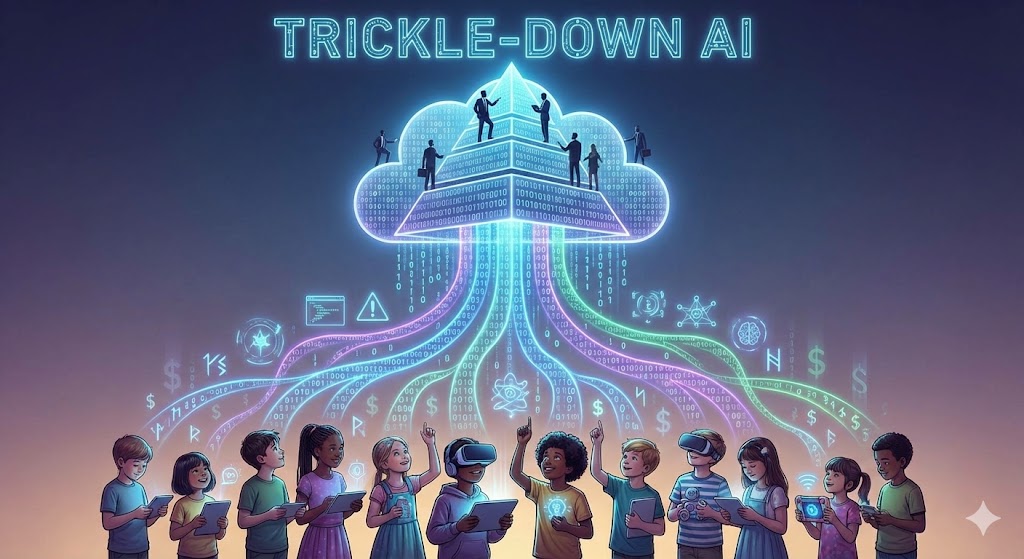
We all remember the promise of “Trickle-Down Economics”—the Reagan-era theory that if we fed the wealthy horse enough oats, eventually the sparrows would get to eat. Critics called it “Voodoo Economics” because the wealth never really made it to the bottom. It stayed stuck in the accounts of the ultra-rich.
But as I watched Dr. Mhairi Aitken on Story in the Public Square this week, I realized we are witnessing a new phenomenon: Trickle-Down AI.
Unlike money, Artificial Intelligence does trickle down. In fact, it floods down. The technology is owned by the billionaires and Big Tech gatekeepers, yes. But the capability—the raw information and the power to create—is saturating the ground level faster than we can adapt. Parents are parenting differently. Teachers are creating lesson plans with AI. Children are absorbing AI literacy by osmosis. We are living in a world where the tools of the elite are in the hands of the playground set.
But is that a good thing?
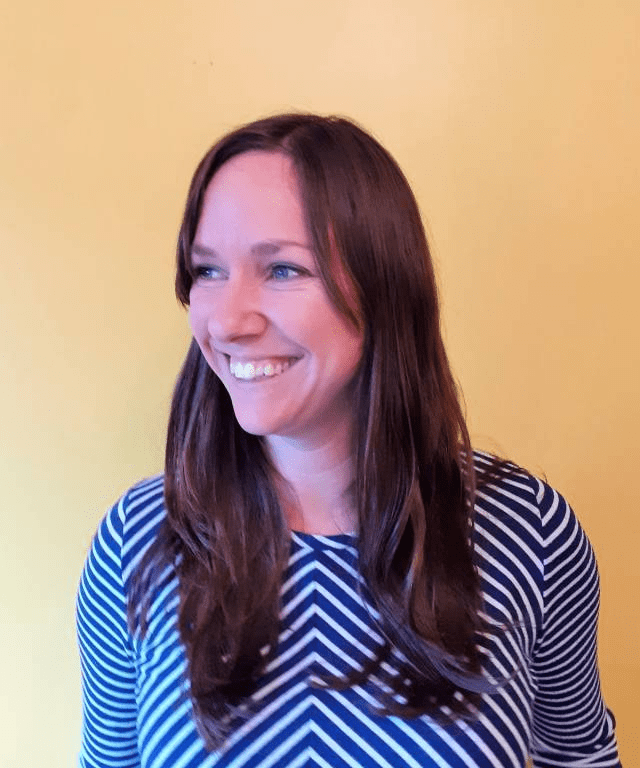
Dr. Mhairi Aitken, Senior Ethics Fellow at The Alan Turing Institute, broke down exactly how this “trickle-down” effect is shaping the next generation.
Here is why we need to pay attention.
1. The Playground Has Changed
Aitken noted that we have moved past simple toys to “smart toys and smart teddy bears that will interact as the child plays with it.” This isn’t science fiction; it’s the holiday shopping list. When AI trickles down into a teddy bear, it brings with it the surveillance capitalism of its creators. Our children aren’t just getting toys – they are becoming marketing information for the Oligarch Class.
2. The Silent Adopters
We assume AI is for business, but Aitken’s research found that “a quarter of children aged 8-12 reported using generative AI technologies.” While adults debate the ethics of ChatGPT in the boardroom, children are already natives. They are bypassing the “fear” stage and moving straight to integration. The “Trickle-Down” effect here is instant—information that was once gatekept behind university tuitions is now available to a 10-year-old with a tablet.
3. The New Confidant
Perhaps most poignantly, Aitken revealed that “children with additional learning needs were significantly more likely to report using generative AI for communication and connection.” This is the benevolent side of Trickle-Down AI. For a child who fears judgment, AI offers a safe harbour. But AI also creates a dangerous dependency. If the “rich” owners of these models program them with bias, that bias trickles down directly into the emotional development of vulnerable children who are “seeking advice on more personal issues.”
4. The “Adult-Centric” Flaw
Despite children being users of this new reality, they are ignored by the architects. As Aitken put it, “Children are probably the group who will be most impacted… but they’re also the group that are the least represented in decision making.” In our “Trickle-Down” reality, the rules are set at the top. The billionaires design the algorithms for profit and efficiency, not for the developing brain of an 8-year-old.
A Note on the “Story in the Public Square”
It is tragic irony that this interview aired on PBS just as the Trump Administration’s funding cuts to the Corporation for Public Broadcasting (CPB) threaten to silence these very conversations. Story in the Public Square provides the kind of nuanced, non-commercial analysis that you won’t find on the algorithm-driven feeds of the for-profit internet.
If we lose public broadcasting, we lose the ability to critique the very powers that are shaping our future. We become passive consumers of Trickle-Down AI, rather than active participants in how it is governed.
The Bottom Line
AI will not make everyone a Harvard graduate, but it will democratize access to knowledge in a way “Trickle-Down Economics” never democratized wealth. The question is no longer if the technology will reach us. The question is: What biases, risks, and agendas are trickling down with it?
 Perry's Pen
Leave a comment