Perry's Pen
A showcase for George Perry's writing
Tag: AI
-

Carlo Rotella’s article discusses his efforts to minimize AI’s impact in classrooms, yet his methods raise concerns about student autonomy and privacy. His requirement for students to submit annotated notes creates pressure for conformity, potentially stifling genuine thought, while his insistence on verbal participation favors extroverted learners, excluding diverse cognitive styles.
-

AI-generated information can be misleading, as it aims to be persuasive rather than accurate. To safeguard against misinformation, employ techniques such as lateral reading, fact-checking quotes, verifying sources, and using the SIFT method. Always investigate claims and compare them across reliable sources for greater accuracy before sharing.
-

The article discusses “Trickle-Down AI,” where artificial intelligence technology quickly spreads among children, contrasting with the failure of “Trickle-Down Economics.” It highlights changes in childhood play, early adoption of AI by kids, its benefits for those with learning needs, and the need for children’s voices in decision-making about AI technologies.
-

A LinkedIn post started a conversation about what questions people should avoid asking AI. The author playfully used AI to answer and found that it gave a strong warning against using AI for medical diagnoses. The answer pointed out that AI has limits, especially when it comes to judging physical health or handling emergencies.
-

The author compiles posts about AI for easy access, discussing its benefits in productivity, education, and creativity. Key topics include the importance of precise prompts in AI, foundational learning before using technology, and playful engagement with AI tools. The content promotes the positive potential of AI while addressing skepticism.
-

The post compares the advancement of AI in the workplace to canning and refrigeration’s impact on nutrition. It argues that, like canned and frozen carrots made nutritious food available year-round, AI tools enhance productivity and creativity. The backlash against AI resembles resistance to technological progress, despite its potential benefits.
-

The author discusses how watching familiar TV shows like Gilligan’s Island aids sleep and relaxation. They draw an analogy between the show’s robotic character and AI, emphasizing the importance of precise instructions for effective results. Future blog posts will explore AI concepts using themes from each character in the show.
-
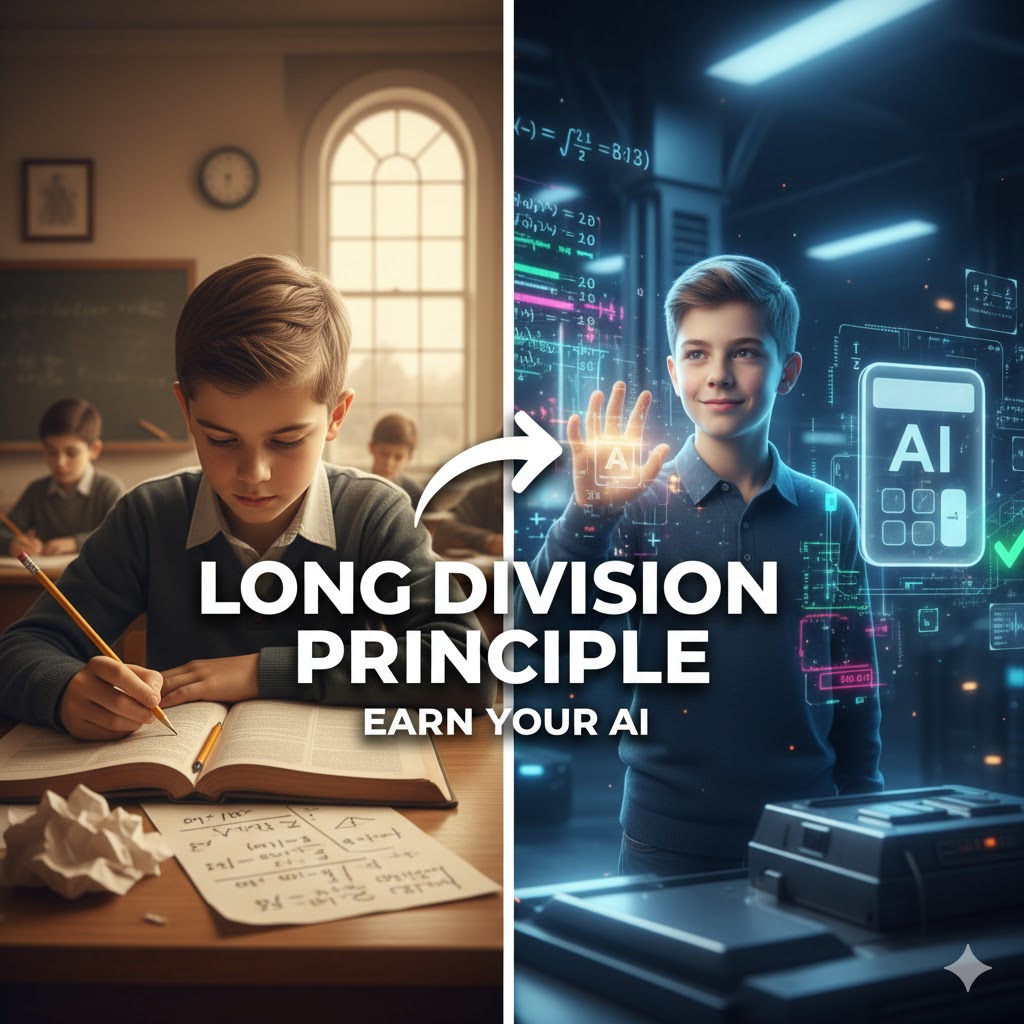
The Long Division Principle emphasizes the need for foundational learning before integrating AI in education. While calculators and AI offer speed and efficiency, understanding the fundamental processes fosters critical thinking and discernment. To effectively use AI, students must first master essential skills, ensuring they develop a genuine understanding of content rather than relying solely on…
-

The author reflects on a college fantasy of instantly learning core subjects, which is now possible through AI. While AI streamlines work by handling information, the author stresses the importance of foundational learning. Those educated before AI developed critical thinking skills, underscoring the necessity of manual education before leveraging technology effectively.
-

The author shares a humorous reflection on the creative process of developing a “K-pop for Winos” concept with a friend, highlighting the importance of precise prompts when using AI like ChatGPT. The narrative explores the interaction between personal experiences and technology, culminating in a one-act play that blends whimsy and gritty reality.
 Perry's Pen