
Visiting Michigan Central Station (MCS) wasn’t the primary reason for my trip to Detroit. Still, the opportunity to do so was certainly a lucky coincidence. That is because MCS is open to the public for the first time in 36 years. Initial visitation hours were limited and only ran from June 21 until Labo(u)r Day, 2024.
My friends picked me up at the train station in Windsor, Ontario, and we made a beeline for the recently reopened Michigan Central Station. It is a short trip, even if it includes driving under the Detroit River and crossing from Canada into the United States of America.
Tailgating in Detroit’s Corktown before visiting Michigan Central
The weather in Detroit that day was 85 degrees (30C), sunny, and humid when we arrived. We arrived before visiting hours began, so we retreated across the street to the cozy confines of one of the top bars in the world – Sugar House.
I enjoyed a couple of gin rickeys. Gin and lime on a hot day after a long train ride seemed like a good recipe for getting me to Relaxville, USA.
I forget what my hosts enjoyed. One of their drinks arrived with a burning piece of cinnamon attached to the glass.

The heartbreaking history of Michigan Central Station
Michigan Central Station was owned for decades by a family that can only be described as “kooks.” They also owned the Ambassador Bridge, an international link between the United States and Canada. Over 40K people use the Ambassador daily, and a couple billion dollars worth of trade crosses the Detroit River every week thanks to this bridge.
The Ambassador Bridge in many ways IS the Canadian economy. It represents so much trade that it even matters to the United States. Protestors shut it down during the pandemic/lockdown, but they too were soon shut down.
The same family left the glorious train station to rot for decades. No windows, no love, no anything. Just imagine being outdoors in the Michigan climate for 30 years or so.
So for decades, the once glamorous building sat there aging and slowly crumbling. To make matters worse, there were no other tall buildings in the immediate area, so Michigan Central Station stood there, almost giving the middle finger to anyone who could see it. This included much of Detroit and part of Canada.
Michigan Central Station looked like the cover of Who’s Next, and was pretty much a real-life version of the monolith scene from 2001: A Space Odyssey.

At the same time, the owners of MCS were seeing their massive asset decline in value. Fortunately, Ford Motor Company acquired ownership of Michigan Central Station in 2018, and the “socialist” government of Canada is building a bridge that will be an alternative to the Ambassador, linking Ontario and Michigan. The new bridge, The Gordie Howe, will be a massive improvement for people on both sides of the Detroit River and throughout the Great Lakes States. The Rust Belt is getting a new lease on life, in other words.
MCS is in Corktown – Detroit’s oldest neighbourhood
Michigan Central Station is just down the street from where Tiger Stadium (aka Heaven on Earth) was located, so there are a lot of great old-time sports bars. It is also Corktown, one of the many places in Detroit currently enjoying a renaissance. Corktown itself is a destination, check it out.
Speaking of Tiger Stadium…
Tiger Stadium was located at the corner of Michigan and Trumbull and was often called “The Corner”. Tiger’s first Opening Day happened on the same weekend that the Titanic sunk, and the last MLB pitch was tossed there on September 27, 1999. (The Tigers lost to the KC Royals, 8-2.)
Attending a game at Tiger Stadium was heavenly for me. I can hear Hall of Fame announcer Ernie Harwell saying “Welcome back to The Corner” as I type.
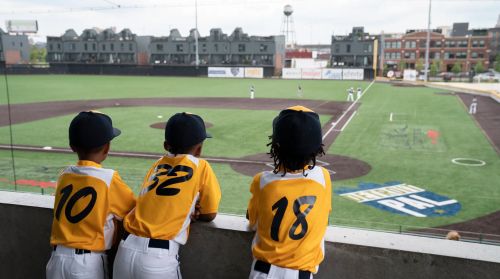
While Tiger is “long gone”, on that same piece of real estate is The Corner Ballpark. It is a facility operated by the Detroit Police Athletic League, and it hosts a plethora of events, most of them sporting. It is a great endeavour, building trust between the public and the police, getting kids active, and keeping them off drugs and away from crime.
Also, the playing field is now ringed by affordable housing instead of grandstands.
Entering Michigan Central Station

Properly lubricated and refreshed, we walked back across the street to get in line, which was now moving. Hell, you can’t tell me that Howard Carter didn’t have a couple of Pimm’s Cups before cracking open the boy king’s bachelor apartment in Egypt 100 years ago.
And once inside, I had a thought – when they first started renovating Michigan Central Station, the inside must have looked a lot like King Tut’s tomb when that was first discovered.
I mentioned that to my friend, and he said
“Yeah, but instead of mummies, they found hobos.”
A look inside Michigan Central Station and some technical background
First look inside Michigan Central Station is a great video produced by WDIV in Detroit. It includes interviews with the CEO of Michigan Central Josh Sirefman and Head of Place Michigan Central Melissa Dittmer. It is a fantastic look inside the renovated MCS, a heartfelt telling of the project.
There is also a great article in The Windsor Star entitled Rescued relics, restored grandeur: Detroit’s Michigan Central Station lives again after six-year renovation that includes fantastic pictures and background plans for MCS.
The “Big 4” comebacks that shook history!
- Titanic (across the Atlantic Ocean, almost) 1912, 1997–
- Tiger Stadium (across the street from MCS) 1912-1999, 2000*-
- King Tut (across the world) 1341 BC – c. 1323 BC, 1922-
- Michigan Central Station 1913-1988, 2024-
My experience strolling through Michigan Central Station
Entering Michigan Central Station is like stepping back in time and entering the future all at once. The building has the grandeur of times long gone, but everything is immaculate and restored to perfection.
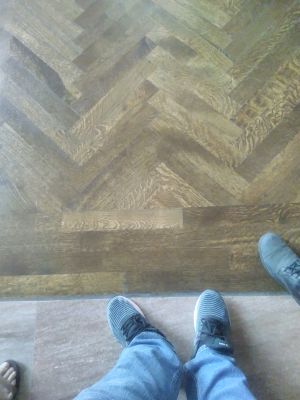
Rich wood walls in places, beautiful flooring, and gorgeous windows that are several stories high let natural light flood in. It all works to perfection. Restored Michigan Central reminded me of Union Station’s Great Hall in Toronto. Words like opulent and welcoming all sprung to mind as I wondrously strolled through MCS. I was amazed at every turn, full of wonderment and optimism.
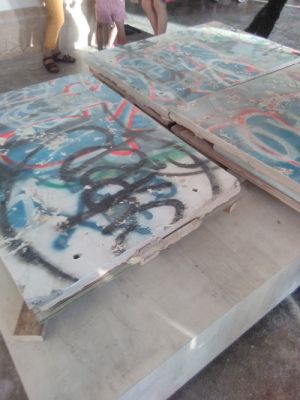
Small portions of a wall remain unrestored, covered in graffiti. It is a fascinating and successful choice. The wall pays homage to the less glorious decades of Michigan Central Station, reminding us that “Those who do not remember history are doomed to repeat it”.

Limestone for MCS resto sourced from the same quarry used 100 years ago
The inside of Michigan Central Station looks phenomenal, and there are all kinds of interesting photos, plaques, artifacts, and things to see. A 2-minute video played on repeat on a giant video cube.
Michigan Central Station closed in 1988 and was left to the elements, vandals, thieves, critters, scavengers and who knows what else for 30 years. That means that a lot of things had to be recreated. What is really cool is that Ford was able to source limestone for the recreations from the original quarry in Indiana used over 100 years ago. Dark Hollow Quarry had been closed for 30 years, so trees had to be cut down and an access road built to facilitate the procurement of Limestone.
Check out this great video produced by Michigan Central showing Dark Hollow Quarry and limestone being extracted. The video is only 2 minutes long, so give it a click.
The Spirit of Detroit is alive and well at Michigan Central Station

Probably what struck me the most was the positive vibe. From the friendly and knowledgeable people working there, to the visitors, to Ford, who spent a Billion dollars revitalizing Michigan Central Station, everyone was hopeful and on the same page.
That’s The Spirit of Detroit that I first experienced nearly 40 years ago and have loved ever since.
The innovativeness and creativity of Detroit is on display at Michigan Central
Great care and love have gone into the restoration of Michigan Central Station, both inside and out. Roosevelt Park, the “front lawn” of MCS, has also been restored and is ready for picnics, football tossing, games of frisbee, and hell, smoking dope since it is legal now.
Detroit’s artists tend to use materials that are a little unusual. Tyree Guyton uses abandoned houses to create The Heidelberg Project. Jewelers use removed graffiti and Fordite to make broaches, earrings, and cufflinks.
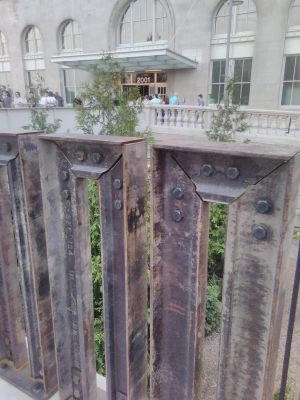
And Michigan Central? Oh, they use old railway tracks to make stunning fences that are on par with the wrought iron balconies one sees down in New Orleans.
Cinder blocks and Blade Runner – dinner at TAKOI
After our “immersive experience” at Michigan Central, my hosts scored us a table at a Thai restaurant across the street called TAKOI.
They sold it to me as “Blade Runner inside a transmission shop”, and that was fairly accurate. In Michigan, or at least Detroit, there are a lot of establishments made from cinder blocks. That is pretty much a no-brainer – cinder blocks don’t burn, and they offer some protection.
TAKOI also has a very inviting patio with an incredibly tall chain link fence protecting it. Those suffering from arthritis in their neck might not be able to look up to see the top of it. Inside is jam-packed with happy, cool people, and the food and service are great. In other words, primo Detroit.

TAKOI exemplifies Detroit
The story of TAKOI is quintessentially Detroit, too. TAKOI (originally KATOI) started as a food truck, got popular enough to become a pop-up in Ann Arbor, then a brick-and-mortar (literally) place in Corktown. Shortly after opening, KATOI was the victim of arson but sprung up again at the same location six months later. (bamboo grows quick).
Not only has TAKOI been a Corktown staple since reopening in 2017, but they also source a lot of their produce from a Detroit farm located about a mile away.
Nemo’s – an old-time sports bar in Detroit’s Corktown
Opened in 1965, Nemo’s is about the same distance as a punt return for a touchdown from where Tiger Stadium stood.It is also about a mile east of Michigan Central Station, right on Michigan Avenue. Along the way, you will pass Slows Bar BQ, a destination restaurant that has been featured on national TV shows. They also have a patio and an impressive collection of craft beers. They are most definitely worth a visit.
But back to Nemo’s. This Corktown sports bar has been in the same family since day one. Many people thought that Nemo’s days were number when Tiger Stadium closed, but it has been thriving for over 20 years now sans Tigers. Part of the continued success is the fleet of shuttle buses they run over to Woodward Avenue for Lions, Tigers, and Red Wings games. When Nemo’s bought the buses, they spent more on painting them than the school buses.

At least 2 Lincolns have ended up inside of Nemo’s. In 1975 the Lincoln belonging to a Teamsters official was blown up in the parking lot. Another time William Clay Ford Sr.’s driver forgot to put his Lincoln in park, and it rolled through the front windows.
And yes, William Clay Ford Sr., son of Edsel Ford, was the father of Bill Ford, the man responsible for purchasing Michigan Central Station and restoring it.
Babe Ruth enjoyed Detroit speakeasies, and Nemo’s in Corktown remembers
Back in the Babe Ruth era of baseball, the New York Yankees would arrive at Michigan Central Station in Detroit for baseball games against the Tigers. The Bambino was famous for having fun off the field as well as on, and he was known to frequent many speakeasies for “extra innings” since it was also the era of prohibition!
Babe Ruth hit the longest-recorded home run in MLB history while playing in Detroit, jolting a ball 575 feet at Tiger Stadium. Ruth almost became the manager of the Tigers, but a trip to Hawaii kiboshed the plans of Tigers owner Frank Navin. Incidentally, Tiger Stadium was known as Navin Field in those days.
Nemo’s on Michigan Avenue remembers Babe Ruth’s on- and off-field heroics in Detroit by hosting a birthday party for him every year in February. Peanuts, Cracker Jacks, and Baby Ruth candy bars are served. There is a cake and Coney Dogs, and the annual event has been happening for almost 40 years.
All of this, my dear friends, is what Detroit and Corktown are all about.
You might also like:
- In the Gig Economy, Even God Drives a Taxi
Blog post about taking a cab from Plymouth Michigan to Detroit - 11 Freedom Convoy Stories You May Have Missed
My humourous take on the blockade of the Ambassador Bridge, the main link between Detroit and Canada - Detroit (Hart Plaza/Spirit of Detroit Plaza): Jan 1, 2023
My experience hanging out at Hart Plaza on New Years Day, 2023 and being moved by the Underground Railroad monument.
 Perry's Pen
Leave a comment